
PILGRIM QUEEN OF THE FAMILY
Behold, your mother.
JOHN 19: 27
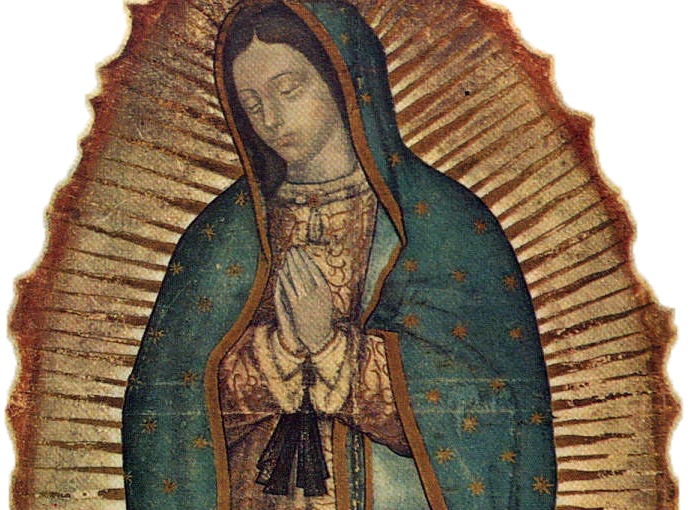





What is Pilgrim Queen of the Family?
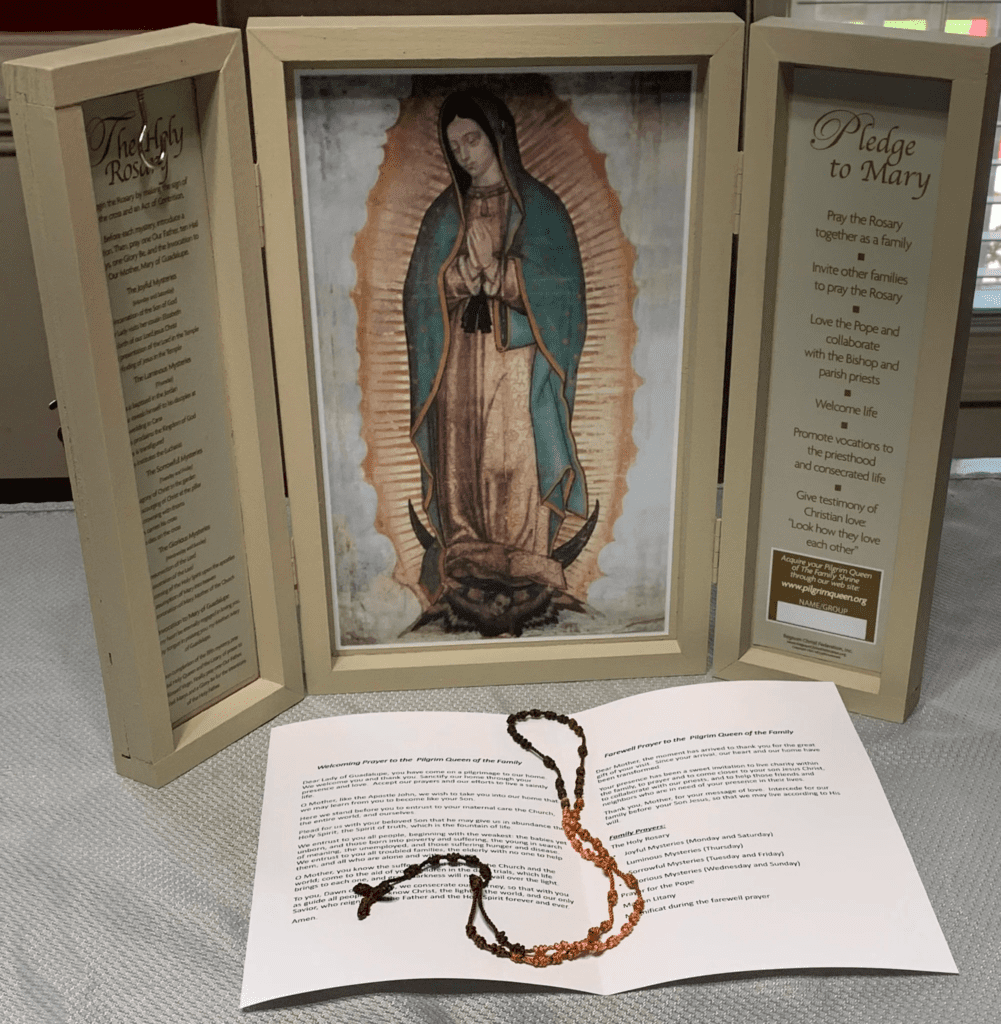
The Pilgrim Queen of the Family is a network of Catholic families united by the desire to live and share the Gospel and to promote the devotion of praying the rosary in all Catholic dioceses, parishes, schools, CCD, or any community group or setting. The importance of praying together, especially the Holy Rosary, is paramount in our lives now. Our world and our individual lives need Our Lady’s intercession, always united in praying for the Church and Pope’s intentions, vocations, families, friends, and all intentions by all individuals. Mary meets all who are devoted to her and those who are not. Mary meets us where we are in our prayer life. Through Pilgrim Queen of the Family, she visits our individual homes, wanting to give many graces and blessings.
The shrine is designed to travel in multitudes of ways inviting people to pray. Upon acquiring the shrine, you become a Guardian of it. Listen and initiate how God is directing you to invite others to prayer. This can happen between established groups of people who you are geographically close to or in frequent contact. New groups of people can also be formed. Another possibility is where the Guardian shares the shrine in impromptu situations and/or in planned activities.
Explore where God is calling you as a Guardian to promote and unite others in prayer. Thank you for saying “yes” to Mary’s call.
"There is no surer way to attract God's blessings on families than the recitation of the Holy Rosary."
Pope Pius XII
Become a Guardian
Explore and see where Mary is inviting you to spread Her devotion.
- Guardian acquires the shrine. Order here.
- Take your shrine to be blessed by a priest and save the shrine box to protect it while traveling between families.
- Invite families geographically close to you to join your group or people who you are in frequent contact.
- A minimum of 2 families and no more than 10 families, including the Guardian.
- Our blessed Mother always meets us where we are spiritually, so reach out to someone who honors “Her”. Praying the rosary is not a requirement to being a member and “She” desires deeply to go to homes where it is not a practice. Mary works silently!
- The invitation to any group runs best if participants are geographically close or see each other at least every 2 weeks.
- Obtain the name, address, e-mail, home and cell phone numbers from all in your group and make a roster.
- Assign permanent days of the month for each participant. This is based on the geographical location of the families so the shrine easily travels between them.
Introduce the Pilgrim Queen of the Family program to your bishop and obtain permission from him to start it up in the diocese.
Factors and considerations:
- Seek wisdom from the Bishop on a couple of parishes in his diocese where the program could be launched.
- Be available to the Bishop to assist him in making contacts and introducing the program to various parish pastors.
Introduce the Pilgrim Queen of the Family program to the parish pastor. Obtain his wisdom on how to proceed.
Factors and considerations:
- Decide on a launching weekend.
- Decide on how to advertise the program; pulpit/bulletin/flyers.
- Set out sign-up sheets and how parishioners can order the shrine after all Masses that weekend.
- Create a master list of participants.
- Within two weeks, host a meeting for information, questions, and planning of future combined Pilgrim Queen of the Family group gatherings. Special “Mary” feast days are great opportunities.
Introduce and obtain permission to launch the Pilgrim Queen of the Family program with the parish pastor or principal.
Factors and considerations:
- Set up fundraising to purchase the shrines for each class.
- Seek parent sponsors to buy the shrines for individual classrooms.
- With the principal or CCD administrator host a combined meeting with all teachers involved to introduce and initiate the program.
- The teachers then introduce the program to parents and students.
Creativity is encouraged. One option is to have a year-long weekly schedule made up and have students sign up for a weekly rotation. Their individual choices could be on their family birthdays, family events, special family crisis times, etc. - Have 1-2 parent volunteers to assist the teacher if necessary to keep the schedule and rotation running smoothly.
This includes groups of any age such as neighborhoods, nursing homes, sports teams, etc.
Factors and considerations:
- The invitation in any group runs best if participants see each other at least every two weeks or are geographically close.
- The goal is for the shrine to be in all participants’ homes monthly.
- The graces flow from the shrine visiting home to home, not being stationary for a long period of time in one location.
- Review the Traditional Ways of Being a Guardian and tweak it to fit your group’s needs!
- Guardian brings the shrine and invites others to pray at:
- Family/friends gatherings
- Workplaces
- visiting the sick
- regular meetings you attend
- fundraiser
- sport team practices/games
- kids programs/activities
- where anyone is going through a difficult time
- The Shrine travels with the Guardian throughout the day and prays with others in daily routine when prompted by God.
- If you have been missed in the monthly rotation or are late to receive the shrine:
- Call the person ahead of you on the list if you don’t receive the shrine on the day you are assigned.
- Call the guardian if the shrine is missing or if you are not able to resolve an issue.
- If one or more participants routinely don’t pass the shrine and others are missing their monthly turn: the guardian needs to visit personally with the person or persons involved. Situations come up where being in a monthly rotation doesn’t work for the family and they need to withdraw from the group. Withdrawal from a group in no way reflects their devotion and love for “Mary”.
- If someone withdraws from the group or is moving: the guardian may get a replacement or redo the schedule giving everyone more days in the month.
- Call the guardian if the shrine is found to be missing or if you are having any difficulties with the shrine’s rotation.
Men & Ten
God ordained you the role, the authority and the gift to be forerunners of prayer for us all.
Mary is available 24/7 for you!
Say "yes" to our Lady's call!
Don't miss this opportunity!
The Invitation
To: All men and boys
From: Our Blessed Mother
What: Pray a decade of the rosary with others. Ask Mary to place on your heart where God is calling you to do that.
When: Daily
One of the most powerful and profound portraits of any man, is him praying! Furthermore, when on his knees praying, it becomes a lasting picture in most people’s minds. God ordained man to to lead in many ways, especially prayer. This has been spoken through God’s sacred scripture repeatedly. It impacts all aspects of his life. Family, friends, work, society, etc. are touched and changed by men praying.
When prayer comes straight from scripture, it prays God’s Word back to the Almighty. This matters and has great favor with our God. That is why the “Our Father” and “Hail Mary” are so effective because the are from sacred scripture. Therefore saying the rosary is one of the front and center ways to get God’s attention! Also it comes through His Mom who has an ear to the Savior!
Order a Shrine
Order a shrine and have it blessed by a priest.
The shrines cost $49.95, and they can be ordered on the RC Federation Online Store by clicking the button below.
RC Federation, Inc. is the parent organization which offers Pilgrim Queen of the Family as well as many other programs and resources for families, parishes and schools.
Gather Together
Host an introductory meeting for your family & friends.
- Conduct a brief meeting for the Pilgrim Queen participants to meet each other and have questions answered.
- Introduce participants to the national website.
- Distribute copies of the roster to all in your group. Tweak the roster if needed. Important points to include:
- Each member is assigned the same days each month to receive the shrine.
- When vacations, unexpected absences, etc., occur, the participant can arrange with the person before or after on the roster to take their time that month.
- To respect the monthly visit of Mary to each family, please be timely in moving the shrine. She has special graces for each family monthly. The shrine is not meant to be stationary.
- Before delivering the shrine to the next participant, call ahead or make arrangements so that they are ready to receive Mary.
- Each member is assigned the same days each month to receive the shrine.
- Include a notebook with the shrine for prayer requests and thanksgiving. (Optional)
- Plan occasional gatherings for your group to pray or socially bond.
- Get ready to be blessed!
Contact Us
We are here to help you.

Pilgrim Queen of the Family National Office
Mission Network Programs USA, Inc.
525 Tribble Gap Road – STE 1466
Cumming, GA 30028
Feel free to contact us via our toll free number at (855) 556-6872 or send us an email using the form on the left.